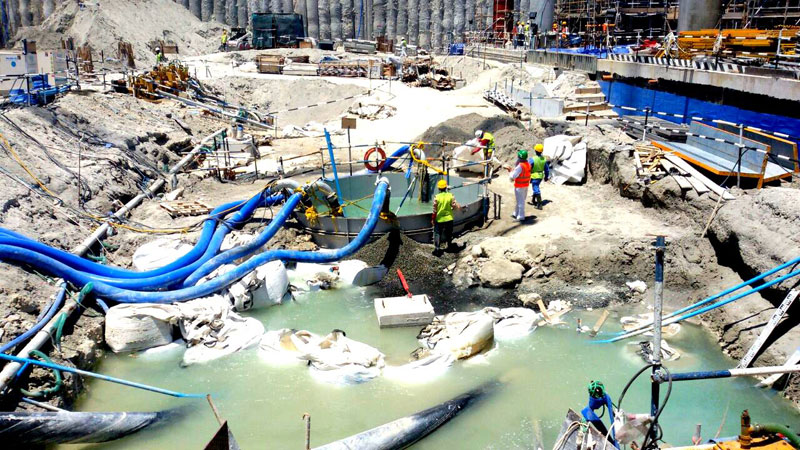



If you've ever stood at the edge of a flooded excavation watching water creep toward the formwork you poured yesterday, you know the sinking feeling that comes with the wrong dewatering decision. Choosing the right pump isn't just a procurement task — it determines whether your site stays dry, your timeline holds, and your below-ground work remains structurally sound.
This guide walks through the key factors that determine the right dewatering pump choice for UAE construction sites — written for site engineers, project managers, and procurement professionals who need practical answers, not a sales catalogue.
Step 1: Understand the Groundwater Situation on Your Site
Before you can choose a pump, you need to understand what you're fighting. UAE groundwater conditions vary significantly across the Emirates:
- Coastal Dubai and Abu Dhabi — shallow water tables, often 1–3 metres below surface, heavily influenced by tides and highly saline
- Sharjah and Ajman inland areas — moderate depth water tables in sandy alluvial deposits
- Ras Al Khaimah and Al Ain — deeper water tables, more varied geology, including gravel and rock
Your geotechnical investigation report will tell you the standing water table depth, soil permeability, and expected water inflow rates. If you don't have this information, investing in a simple borehole test before specifying your pump will save you from an expensive undersizing mistake.
Step 2: Match the Pump Type to Your Depth and Soil
The two most common dewatering methods in UAE construction are well point systems and open sump pumping. Each suits different conditions:
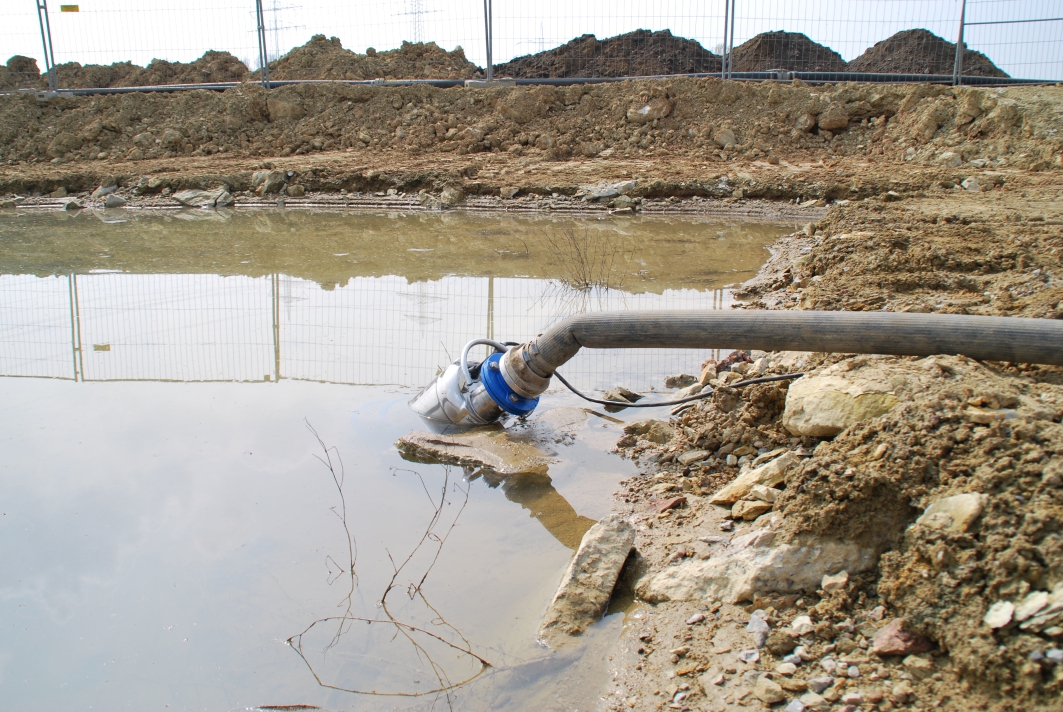
- Open sump pumping — the simplest approach. Water is allowed to flow or seep into a collection sump at the lowest point of the excavation, where a self-priming pump removes it. Effective for minor water ingress in low-permeability soils.
- Well point dewatering — a perimeter of small-diameter well points installed around the excavation draws down the water table before you excavate. Effective to approximately 5–6 metres of drawdown in sandy soils — very common in UAE coastal areas.
- Deep well dewatering — large-diameter bored wells with submersible pumps for deep excavations or high-permeability formations. Required when well point systems cannot achieve the necessary drawdown.
Step 3: Size the Pump Correctly
The most common dewatering mistake is undersizing — buying a pump that can just handle estimated flow in normal conditions, leaving no margin for heavier rainfall, unexpected water inflows, or pump wear. As a general rule, size your pump at 1.5 to 2 times the estimated maximum inflow rate.
Key parameters to establish before sizing:
- Estimated groundwater inflow rate in litres per minute or m³/hour
- Total dynamic head — the vertical lift plus friction losses in your discharge pipework
- Solid content of the water — fine sand or silt requires a pump with a suitable solids-handling impeller
- Suction lift — how far below the pump the water surface sits
Step 4: Consider the Drive — Diesel vs Electric
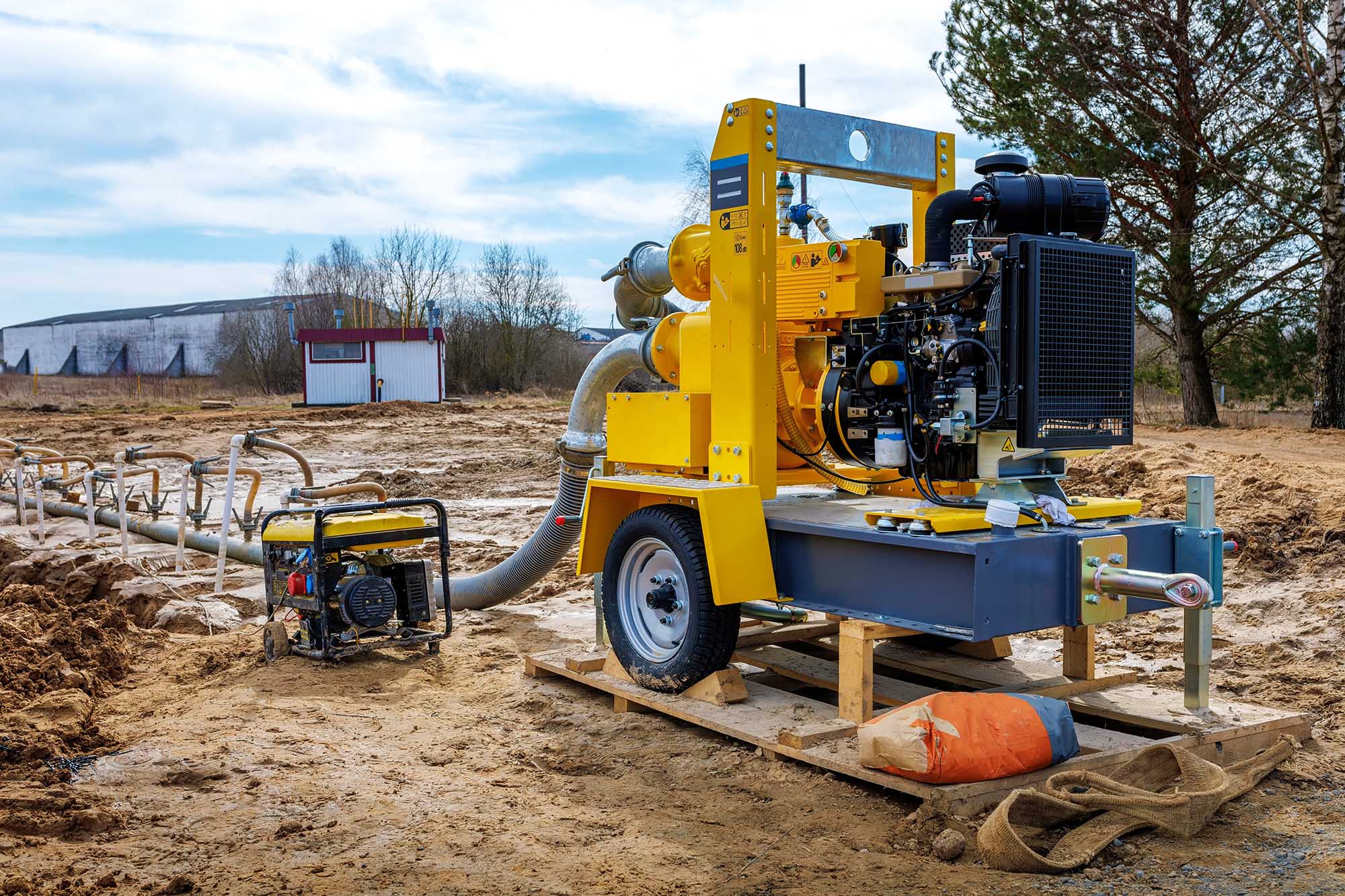
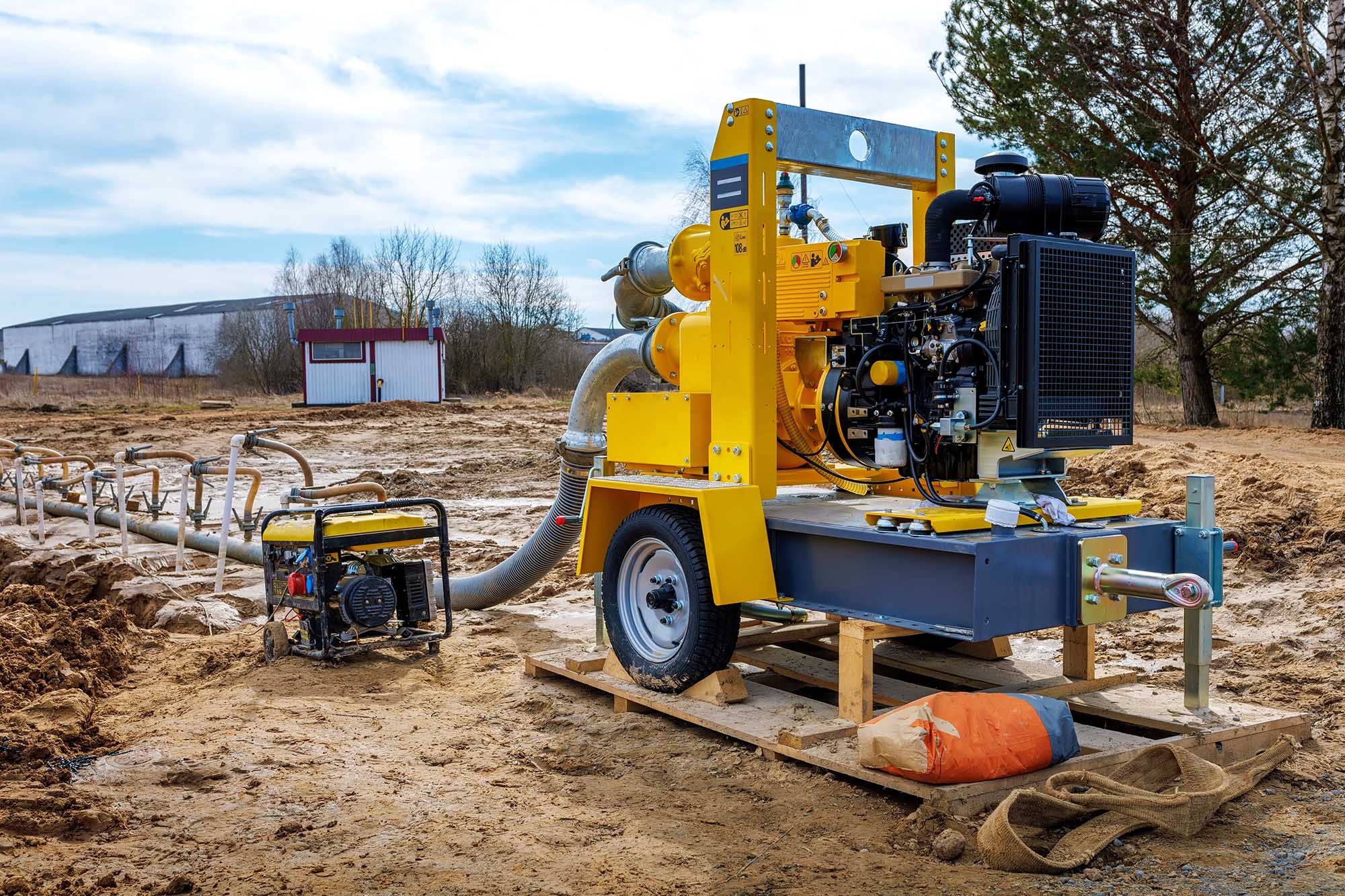
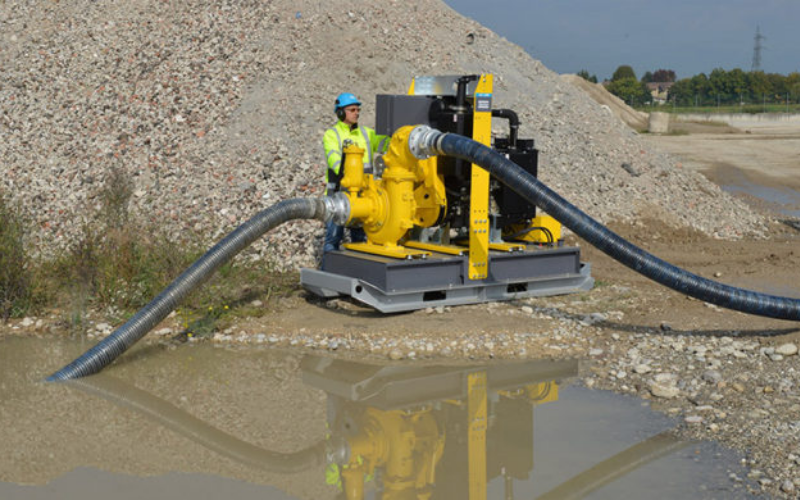
In the UAE, diesel-driven pumps dominate construction dewatering for good reason. Most excavation sites don't have reliable grid power at the start of a project, and diesel gives you independence — start anywhere, run as long as you have fuel. Electric-driven pumps suit later-stage work in permanent or semi-permanent pump stations.
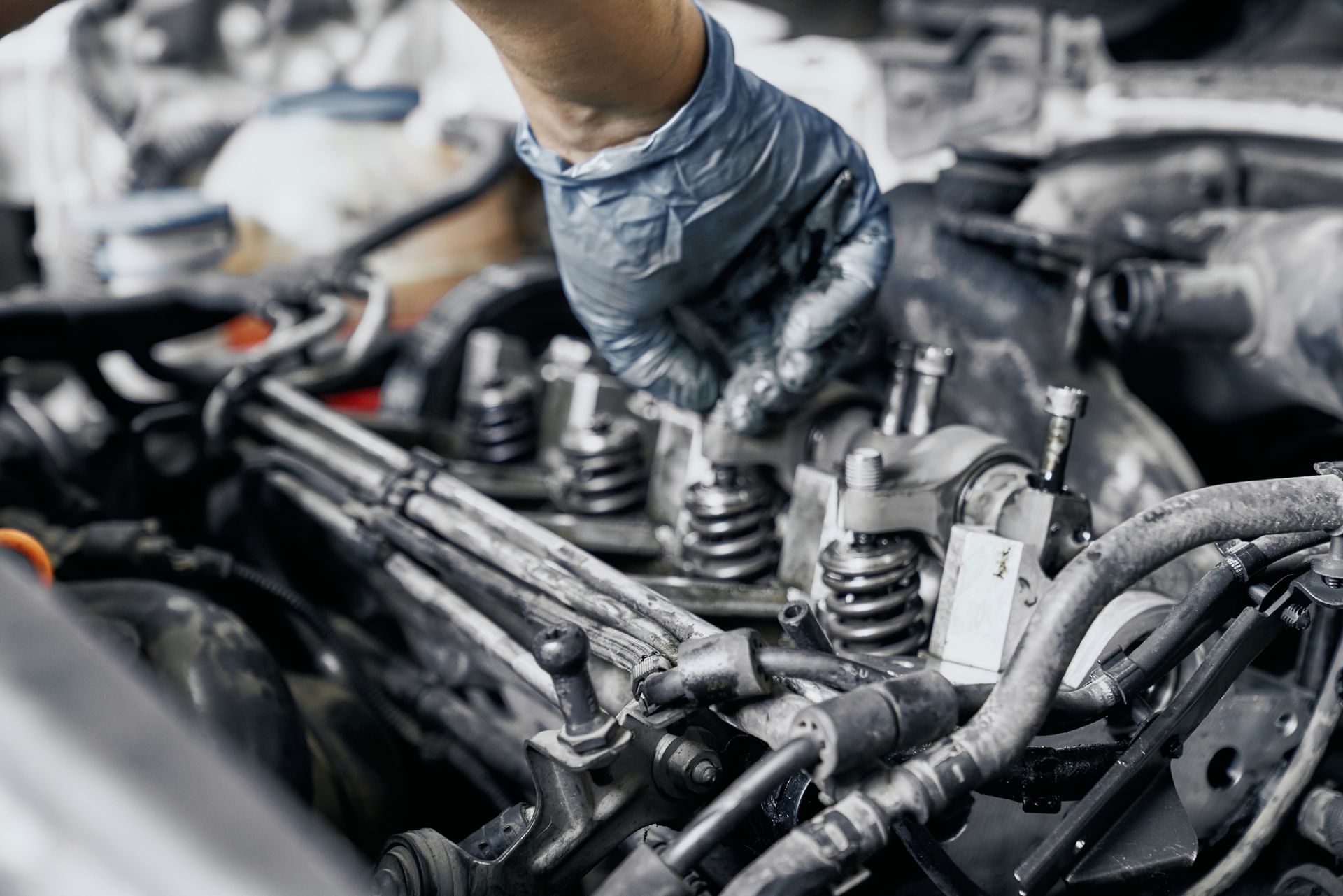
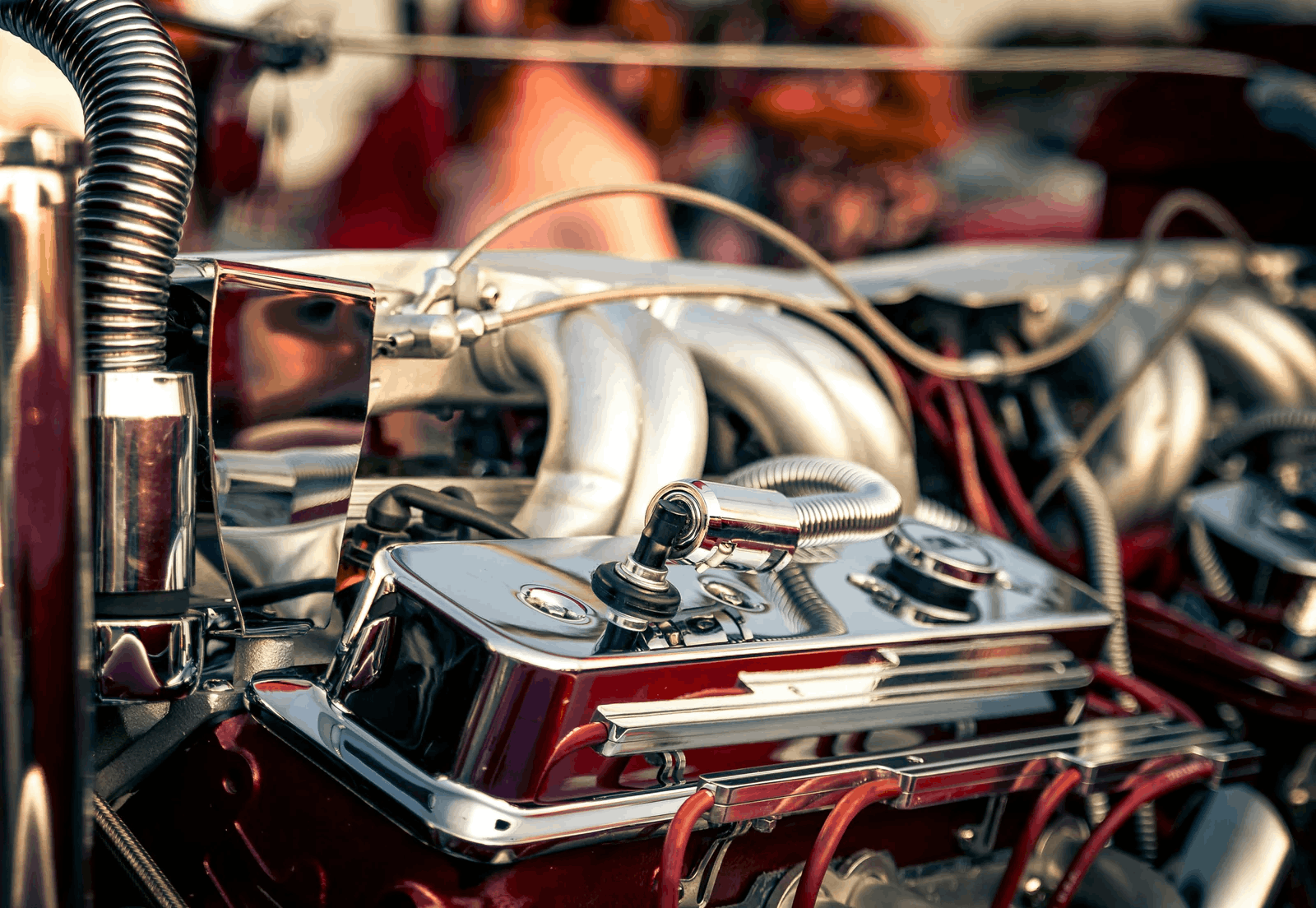
For diesel-driven pumps, the engine choice matters as much as the pump itself. Look for engines rated for continuous duty at UAE ambient temperatures — not just peak power at 20°C. TAFE POWER engines, used in Rover Industry's ROVER pump series, are specifically rated for high-ambient UAE conditions.
Step 5: Plan Your Discharge
A pump that can't discharge effectively is no pump at all. Plan your discharge route before you specify the pump:
- Confirm the nearest legal discharge point — storm drain, settling tank, or approved disposal site
- Calculate the distance and elevation change to determine discharge head
- Size your discharge pipework to avoid excessive friction losses — undersized pipes can reduce pump output by 30–40%
- In UAE, check the Dubai Municipality (DM) or the relevant authority permits for site dewatering discharge
The ROVER Series — Built for UAE Dewatering
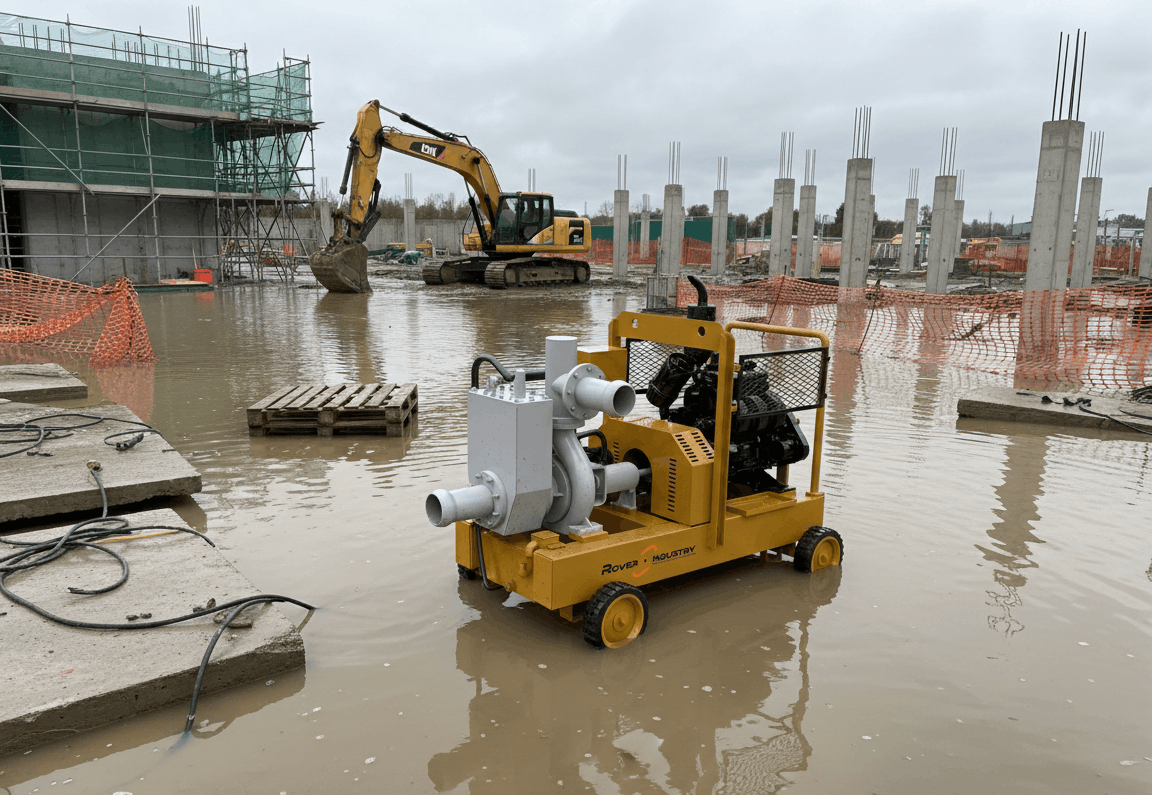
Rover Industry's ROVER pump series covers discharges from 4 inches to 12 inches, handling flows from 200 to over 3,000 litres per minute with solids handling up to 50mm. Every pump is powered by a TAFE POWER diesel engine and is stocked ready for rapid deployment from our Sharjah facility.
.png)
.png)

 (1).png)

.png)